 North and South Korea had established different capitals and governments by 1948. Kim Il Sung led the Democratic People's Republic of Korea. Their base was in North Korea in a city called Pyongyang. The South Koreans, on the other hand, established teir base in Seoul, which was Korea's original capital. The South Koreans were led by Syngman Rhee. By June of 1949, American troops had gradually been pulled out of Korea. The Soviet Union saw this as a retreat from American control of Korean land. The Soviets decided to prepare North Korea for battle, supplying them with tanks, airplanes, and money, so they could take over more land. The first conflict occured on the 38th parallel on June 25, 1950. The North Koreans crossed the 38th parallel with armed forces. The soon penetrated South Korea's border, while the South Koreans requested the United Nations for help. The vote passed in the United Nations Security Council. Surprisingly, the Soviets did not come, and the Soviets could not veto the vote. President Truman decided to support the South Koreans with many troops and the American fleet. Across 16 nations, 520,000 troops helped South Korea's 590,000 troops. General Douglas MacArthur, a former WWII hero, was placed in control of the counterattack against the North Korean groups. MacArthur decided to land troops in Inchon while another group of troops moved up to Pusan. The strategy worked very well. At the same time, United Nation troops were chasing the remaining North Korean troops back across the 38th parallel. The Chinese, however, decided to support North Korea in the war. The Chinese sent 300,000 troops in order to keep North Korea as a Communist buffer state. The Chinese did not like the threat of the American fleet fighting Communism so close to their borders. The Chinese fought with the North Koreans and they got back into South Korea. MacArthur decided that it would be a good idea to attack China. President Truman disagreed, and did not allow MacArthur to proceed. Eventually, Truman disagreed with MacArthur to the point where on April 11, 1951, Truman had fired MacArthur. Many Americans were upset at this decision. Over 69% of Americans had liked MacArthur, but soon the controversy disappeared. The Soviets proposed to end the war with a cease-fire, and in July 1953, the two sides signed an armistice, ending the Korean War.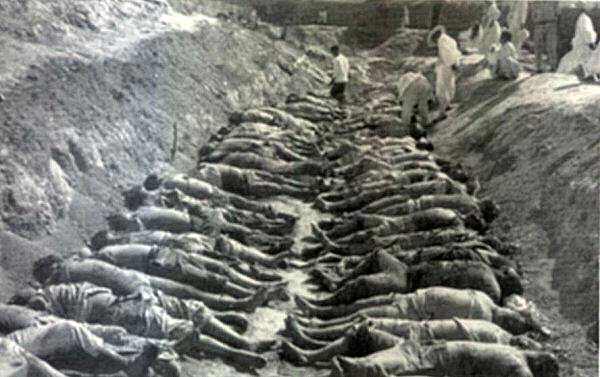
by Vivek and Ranier
4-8-09 E period USH

